
A Deep Dive into the Role of a Dimensional Control Surveyor at RM Surveys
Dimensional Control surveyors at RM Surveys work in environments where precision directly affects whether complex assets can be assembled, installed, and operated safely. Our people collaborate closely with engineers, fabricators, and construction teams across manufacturing, resources, energy, and major infrastructure projects.
Unlike general surveying roles that typically set out structures in their final position on site, Dimensional Control often begins much earlier in the asset lifecycle. Surveyors may be working inside fabrication facilities, measuring components that have not yet reached their final location and verifying that they meet the required tolerances before installation.
“Much of our work happens before the structure even reaches site. We measure components in fabrication sheds while they’re still individual pieces. They might be lying on their side, suspended, or partially assembled. Our job is to verify each piece is correct so that when everything comes together later, it fits exactly as designed.” -Gary Lambert
This work requires technical depth, spatial awareness, and strong engineering judgement. Dimensional Control surveyors analyse complex assemblies, manage critical interfaces between fabricated and installed components, and confirm that systems align exactly as intended.
The work is carried out to extremely tight tolerances, often measured in millimetres or less. Small deviations can affect installation, long-term performance, or operational safety.
Through fabrication verification, installation alignment, and final compliance checks, Dimensional Control surveying supports the full lifecycle of an asset. Accurate measurement data helps reduce rework during construction, supports safe operation, and provides reliable reference information for future maintenance or modification.
At RM Surveys, this role is supported by experienced people, advanced metrology technology, and proven workflows that ensure every measurement delivers dependable, traceable results.
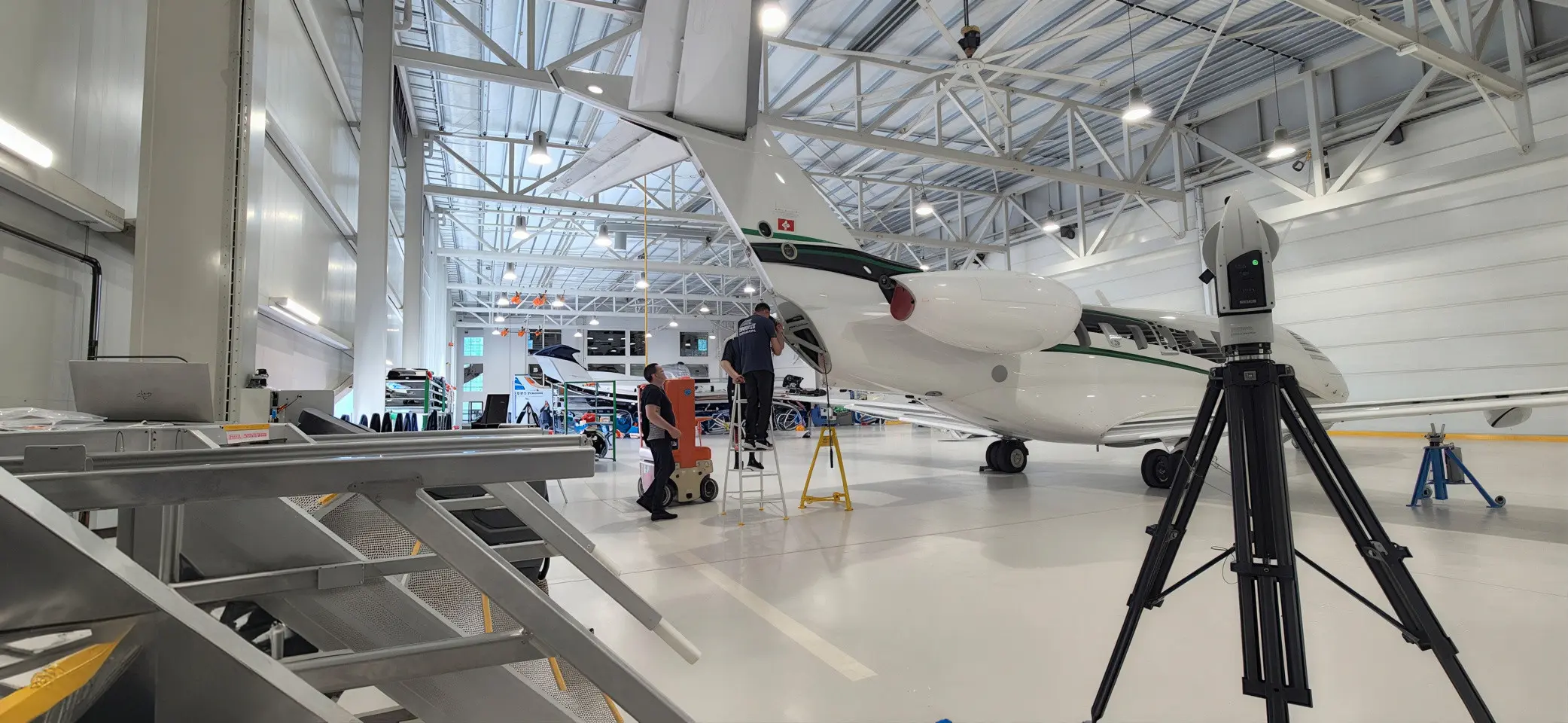
How dimensional control differs from traditional surveying
Traditional construction surveying typically involves setting out structures exactly where the design requires them to be built. Surveyors work within a fixed coordinate system that defines the final position of foundations, structures, and infrastructure.
Dimensional Control operates differently.
Instead of working only in the final installed locations, Dimensional Control surveyors often measure components during fabrication, when structures are still being assembled in sections and may not be positioned as they will be on site.
In these situations, surveyors create a coordinate system specific to the structure being measured. Design models are then compared to the measured data using best-fit analysis, allowing surveyors to identify where small deviations exist and how they may affect final assembly.
This requires a high level of technical judgement. Surveyors must determine how components will align once installed and where tolerances can be managed without affecting the overall structure.
“Think of it like building a complex Lego model. Each individual piece needs to be correct so that the next piece fits properly. You might assemble sections in different orientations during the build, but when everything comes together at the end, the full structure still needs to match the design.” -Gary Lambert
What does a typical day look like for a dimensional control surveyor?
While project requirements vary, most days follow a structured workflow that combines on-site measurement with analysis and reporting.
Field measurement in fabrication facilities
Many projects begin in fabrication sheds where large components are manufactured before being transported to the site.
Dimensional Control surveyors measure structural elements, mechanical components, and connection interfaces to confirm they meet the required tolerances. Because components may not yet be in their final orientation, surveyors create temporary coordinate systems to analyse the geometry accurately.
It is common to work on multiple components within a single location.
Depending on the size and complexity of the structures, a Dimensional Control surveyor may work on anywhere from one to four different jobs in a day.
Design comparison and best-fit analysis
Once measurement data has been captured, the next step is comparing it with the design model.
Surveyors import the design geometry and perform best-fit analysis to determine how the fabricated components align with the intended design. If deviations are identified, the results are reviewed with the client to determine whether adjustments are required.
If components are within acceptable tolerance, surveyors may set out reference marks to guide the next stage of fabrication or installation.
Reporting and client communication
Back in the office, surveyors prepare detailed reports that clearly communicate the results of the measurement process.
These reports are designed to be visually clear and easy for engineers and project teams to interpret. They document measurement results, highlight deviations where relevant, and provide traceable data that can support the next stage of the project.
Responsibility and ownership in dimensional control
Dimensional control surveyors are responsible for more than collecting data. They take ownership of accuracy, survey approach, and delivery timeframes.
This includes selecting the appropriate tools, establishing control and coordinate systems, and working closely with engineers, fabricators, and construction teams. When deviations are identified, surveyors quantify them clearly and explain what they mean for the project.
This level of responsibility is a defining part of the role, particularly on complex or high-risk projects.
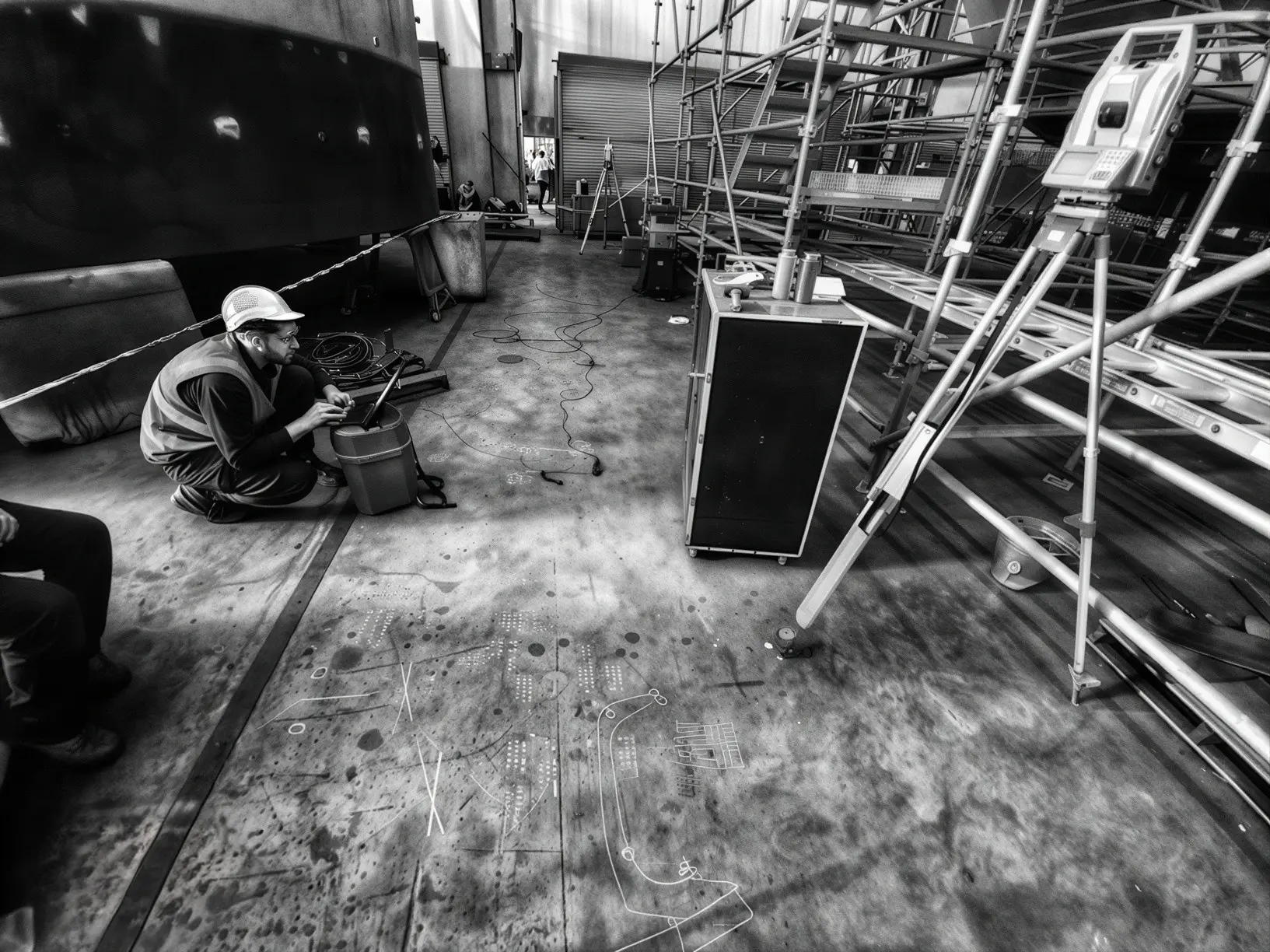
Working on complex engineering and industrial projects
Dimensional Control surveyors at RM Surveys support projects where small inaccuracies can have significant consequences during assembly.
Examples of this work include:
Car Dumper fabrication and installation for BHP
These systems are used to unload iron ore rail wagons at port facilities. While the overall structure may measure around 30 x 15 x 15 metres, it contains hundreds of components that must meet tight tolerances, often between 0.2mm and 0.5mm.
Large-scale shiploaders
Shiploaders used in bulk export terminals can exceed 50 metres in height and move along rails while loading vessels. Critical alignment components must be verified to ensure structural stability and reliable operation.
Projects like these demonstrate how Dimensional Control supports the assembly of large, high-value industrial assets.
Tools and technology used in dimensional control surveying
Modern dimensional control relies on advanced measurement technology to achieve the required level of accuracy and efficiency.
Common tools and systems
Dimensional Control surveyors rely on several specialised measurement systems to capture and analyse high-accuracy spatial data. Common tools include:
- Laser trackers for ultra-precise alignment and verification
- High-accuracy total stations for establishing control networks and reference points
- 3D laser scanners to capture complex geometries and generate point cloud models
These tools allow large volumes of measurement data to be captured efficiently, even in confined fabrication environments or operational industrial facilities.
High-precision metrology instruments
Dimensional Control work at RM Surveys relies on metrology-grade instruments capable of achieving extremely tight tolerances.
Laser trackers are one of the most important tools used by the team. These instruments can achieve measurement accuracy as fine as 0.02 millimetres, allowing surveyors to verify alignment and geometry far beyond the capability of standard construction surveying equipment.
For comparison, typical civil foundation surveys may work within tolerances of approximately ±10mm for concrete placement and ±3mm for bolt positions.
Dimensional Control work often requires tolerances between ±5mm for general steel structures, ±2mm for bolt interfaces, and as tight as ±0.2mm for critical alignment components.
Metrology workflows, traceability, and data quality
Dimensional Control surveying relies on structured metrology workflows to manage uncertainty and maintain measurement accuracy. Surveyors establish appropriate coordinate systems, compare measured data with design models, and document results in a clear and consistent format.
At RM Surveys, these workflows are supported by internal methodologies developed specifically for high-precision measurement environments. These processes standardise how data is captured, verified, and reported, ensuring results remain consistent across projects and teams.
They also support RM Surveys’ ISO 17020 NATA accreditation requirements. Measurements must be fully traceable, meaning every reported result can be linked back to the original field observation, the processing workflow, and the final deliverable provided to the client.
The outcome is measurement data that engineers, fabricators, and project teams can rely on for approvals, compliance, and critical installation decisions.
Professional development and responsibility in dimensional control
Dimensional Control surveying requires a combination of technical expertise, practical judgement, and strong collaboration with project teams.
As surveyors gain experience, their role expands beyond measurement to include mentoring, communication, and leadership on complex projects.
Developing dimensional control expertise
For surveyors transitioning from construction or SMP roles, one of the biggest conceptual shifts is learning to think in full three-dimensional measurement.
Many construction survey workflows operate primarily in two dimensions, referencing horizontal position and vertical height. Dimensional Control surveying requires a more advanced spatial approach, where measurements are analysed across complex three-dimensional geometries.
Developing this capability takes time, mentorship, and hands-on experience with metrology-grade equipment and advanced analysis workflows.
At RM Surveys, junior Dimensional Control surveyors work closely with experienced specialists to build these skills and gradually take on more complex project responsibilities.
Collaboration and mentoring
Dimensional Control surveyors work closely with engineers, fabricators, project managers, and asset owners throughout the lifecycle of a project. Clear communication is essential to ensure measurement results are understood and can be used effectively in design reviews, fabrication decisions, and installation planning.
With experience, surveyors also mentor junior staff and help maintain consistent delivery standards across projects, sharing practical knowledge about measurement techniques, workflows, and problem-solving in complex environments.
Safety and site responsibility
Much of this work takes place in active industrial environments where safety is critical. Surveyors contribute to safe systems of work through SWMS development, toolbox talks, and compliance with site procedures.
Survey methods are adapted to suit site access limitations and operational activities while maintaining the required level of measurement accuracy.
In many situations, survey results directly influence installation decisions or the operation of large equipment, making strong safety awareness essential.
Why surveyors move into dimensional control
For many experienced surveyors and engineers, Dimensional Control offers the opportunity to work on more complex projects using advanced measurement technology.
At RM Surveys, Dimensional Control surveying supports manufacturing, resources, energy, and infrastructure assets across Western Australia and beyond.
The role combines technical depth with responsibility and long-term career development in industries where precision has clear, real-world consequences.

Interested in dimensional control surveying?
Dimensional Control surveying is suited to people who value precision, enjoy solving complex challenges, and want their work to have a real impact on critical outcomes.
You can learn more about the Dimensional Control surveying role, check out some of our projects, or view current opportunities via our careers page.
Frequently asked questions
When is dimensional control surveying required on a project?
Dimensional control surveying is required when projects involve tight tolerances, complex assemblies, or critical mechanical and structural interfaces. This commonly occurs during the fabrication and installation of large equipment, steel structures, or industrial machinery where small deviations can prevent components from fitting together correctly.
By verifying dimensions before installation, dimensional control helps prevent costly rework, installation delays, and operational issues.
How early should dimensional control be involved in a project?
Dimensional control is most effective when involved early in the fabrication and construction process. Surveyors can verify components while they are still being manufactured, identifying potential issues before parts are transported to site.
Early verification reduces the risk of misalignment during installation and allows project teams to resolve problems before they affect schedules or commissioning.
Can dimensional control be carried out in live or operating facilities?
Yes. Dimensional control surveying is frequently performed in active industrial environments such as fabrication workshops, processing plants, and operational infrastructure sites.
Survey methods and equipment are selected to suit access constraints, safety requirements, and ongoing operations while maintaining the required level of measurement accuracy.
What level of accuracy does dimensional control surveying typically require?
Dimensional control surveying often works to much tighter tolerances than standard construction surveying.
While civil construction surveys may operate within tolerances of around ±10mm for concrete placement, dimensional control work can require ±5mm for general steel structures, ±2mm for bolt interfaces, and as tight as ±0.2mm for critical alignment components.
Achieving this level of accuracy requires specialised metrology equipment and structured measurement workflows.
What happens if measurements show components are outside tolerance?
If a component is found to be outside tolerance, the deviation is quantified and clearly documented in the survey report. This allows engineers, fabricators, and project teams to assess the impact and determine the appropriate corrective action before installation or commissioning proceeds.
How is dimensional control data compared with design models?
Measurement data is analysed against the project’s design models using best-fit comparison methods. This allows surveyors to understand how fabricated components align with the intended design and identify any deviations.
The results provide engineers and project teams with clear information to support installation decisions and quality assurance.
If you’d prefer to start with a conversation, contact the RM Surveys team to discuss how your experience could fit within our work.
Contact us